Of the 109 lunar missions during the period, 61 were successful and 48 had failed, it stated.

ISRO Chairman V Narayanan announced India's plan to significantly expand its space operations with four functional launch pads by 2029, including a new SSLV complex at Kulasekarapattinam. He stressed the importance of private sector partnerships to meet global demand and foster economic growth. Narayanan also detailed upcoming Gaganyaan uncrewed tests within the next two months and revealed plans for a collaborative Chandrayaan-5 lunar mission with Japan.

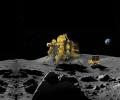
In a boost to the space programme, the government on Wednesday approved the Chandrayaan-4 mission to bring back moon rocks to earth, to send a spacecraft to orbit planet Venus and to expand the Gaganyaan project to build an Indian space station.

Russia's state space corporation, Roskosmos, according to the Reuters report, said it had lost contact with the spacecraft shortly after a problem occurred as it was shunted into pre-landing orbit on Saturday.
G Madhavan Nair said ISRO had got necessary approvals from the Union government for the project.
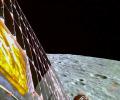
Chandrayaan-1, India's first mission to the Moon, was launched on October 22, 2008 from Sriharikota spaceport in Andhra Pradesh.
The successful Artemis II mission has boosted confidence in India's upcoming Gaganyaan mission, as both aim to demonstrate similar spaceflight capabilities. Experts highlight the collaboration between ISRO and NASA and the shared training programmes for astronauts.
NASA has announced three missions to the moon as part of efforts to establish a permanent base on the earth's natural satellite. The USD 20 billion plan includes lunar rovers and drones for experiments to help master skills to live and operate in the dangerous environment.

Four astronauts from NASA's Artemis II mission have safely returned to Earth after completing a historic flyby of the moon, marking the first human journey to the moon in over 50 years.

Glimpses from Artemis II's dramatic return to Earth

After 54 years, the human race will set out for an encounter with planet earth's closest neighbour, the Moon. The Artemis II Moon mission was initially scheduled to launch in February as a 10-day lunar flight, carrying four astronauts -- NASA's Reid Wiseman, Christina Koch and Victor Glover, along with Canadian astronaut Jeremy Hansen.
NASA has invited ISRO to join its ambitious Moon Base mission to establish a permanent lunar outpost near the Moon's South Pole, aiming for scientific discoveries and future deep space exploration. This invitation follows discussions at the Civil Space Joint Working Group meeting in Bengaluru, where both nations also advanced cooperation under the Artemis Accords and the TRUST initiative.

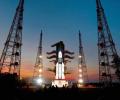
Four years after it broke many hearts, Indian Space Research Organisation's Chandrayaan is all set to soar towards the moon in its third expedition on Friday in an attempt to put the country in an elite club of nations that accomplished lunar missions with a soft landing.
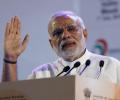
I urge you all to watch the special moments of Chandrayaan-2 descending on to the Lunar South Pole! Do share your photos on social media. I will re-tweet some of them too," the prime minister wrote on Twitter.
China will launch its maiden mission to moon in November, a third major event in the Chinese space programme after the launch of a satellite and amanned space mission.
The Indian Space Research Organisation has begun the work on its next Rs 10,000 crore ambitious project the ''manned mission'' which will witness an Indian transported to space, Chandradathan, Director of Sathish Dhavan Space Centre said in Sriharikota in Andhra Pradesh on Tuesday.

US Ambassador to India, Sergio Gor, highlighted the evolving US-India space partnership, moving from cooperation to "co-creation" at the Bengaluru Space Expo. He emphasised joint design, funding, and co-authoring the future of human discovery, citing the NISAR satellite and India's participation in the Artemis Accords as key examples of this growing synergy.
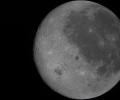
The National Aeronautics and Space Administration (NASA) on Monday said the crew of Artemis II is preparing for a historic lunar flyby that will take humans farther from Earth than ever before.

There is no answer to the question of how IN-SPACe invited EOIs for ISRO's mature rockets and whether it was based on any government policy decision.

The glimpses from NASA's Artemis II mission capture a historic moment -- preparations for humanity's return to the Moon for the first time since the Apollo 17 Moon landing in 1972.

A crew of four astronauts boarded their spacecraft for the landmark flight, which represents a major milestone in lunar exploration.

Indian-American scientist Amit Kshatriya's journey from watching rocket launches in Houston to becoming NASA's Associate Administrator is a testament to his dedication and expertise in space exploration.

'From day one, our vision has been to build a company that develops and owns the technologies defining the future of space.'
G Madhavan Nair was in Thiruvananthapuram to mark the 40th anniversary of the launching of 'sounding' rockets from the Thumba Vikram Sarabhai Space Centre.

TVF deserves credit for breaking its mould of picking and sticking to favourable and comfortable genres. Space Gen could serve as a launch pad for more exciting content to come, hopes Divya Nair.

From selfies to science, astronauts aboard Orion document life, work and discovery during their historic Moon flyby.

The mission ferries four astronauts -- NASA's Reid Wiseman, Christina Koch and Victor Glover and Canada's Jeremy Hansen -- onboard the Orion spacecraft for a 10 day lunar flyby. Unlike the Apollo missions that aimed for landing, Artemis II is focused on testing. The crew will evaluate critical systems such as life support, navigation, and communication in deep space -- essential steps before humans can return to the lunar surface.

NASA's Artemis II crew offers a rare look at Earth shrinking into space and the Moon coming into view during humanity's return to deep space.

One of the most striking features in this view is the Orientale Basin, a massive impact crater about 600 miles (965 km) wide.

While India's interplanetary ambitions remain significant, the current pace of financial and technical progress raises questions about whether the 2027-2028 timelines can be met.

The Artemis II mission has made history as its astronauts journeyed farther from Earth than any humans before, conducting a lunar flyby and observing the moon's far side in unprecedented detail.

Jeff Bezos' Blue Origin experienced a major setback as its New Glenn rocket exploded during an engine-firing test at a launch pad in Florida, raising concerns about its ability to compete with SpaceX in the commercial space race.
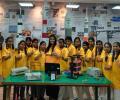
If it becomes a reality, the Chennai-based company will become the first private player from India to conduct such a mission to the lunar surface.

The EoI comes at a time when ISRO is working to enhance LVM3's payload capacity to five tonnes in GTO and is also evaluating the procurement of a Russian semi-cryogenic engine for the vehicle's second stage.

After days of intense activity, this phase is about staying sharp and ready for the last critical steps.
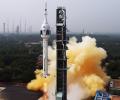
ISRO Chairman V Narayanan announces ambitious space program goals, including landing Indians on the Moon by 2040 and launching the 'Gaganyaan' mission in 2027. The agency is also working on a national space station and uncrewed missions.

Lando Norris secured a dominant victory in the Miami Grand Prix sprint race, leading a McLaren one-two finish. Charles Leclerc finished third, while Mercedes faced challenges. The main grand prix is scheduled for Sunday.

For the first time, there will be an Indian connection to a crewed Moon mission.

The Indian Space Research Organisation (ISRO) has received approval for the Chandrayaan-5 mission, which aims to study the Moon's surface using a 250kg rover. The mission will be conducted in collaboration with Japan. This follows the success of the Chandrayaan-3 mission, which achieved a soft landing on the Moon's South Pole in August 2023. ISRO is also planning to establish a space station, Bharatiya Space Station, in the near future.
